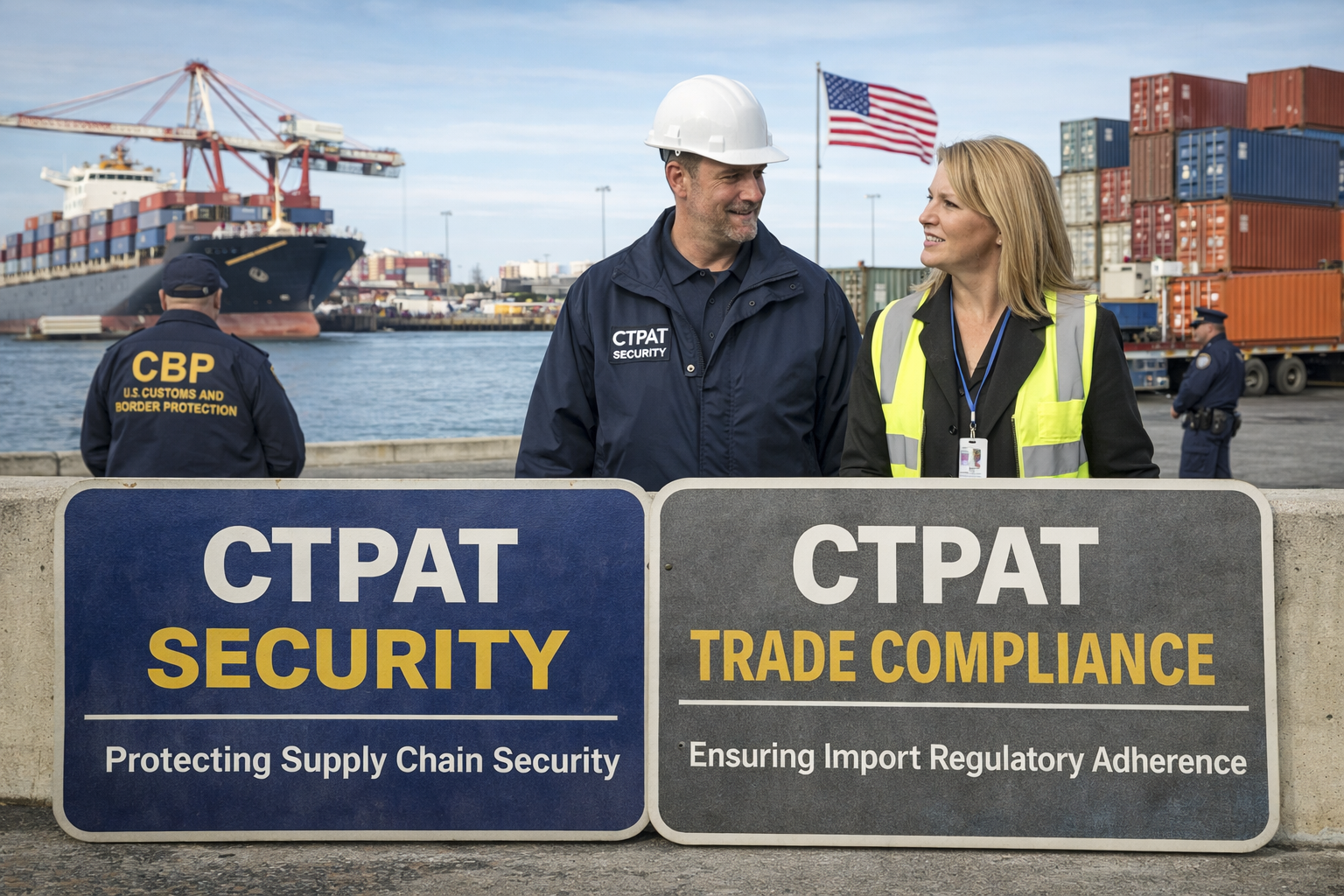
Many professionals in logistics hear “CTPAT” and assume it’s one single program but in reality CTPAT has evolved into two distinct components:
- CTPAT Security (the original program) - Physical protection of goods and processes
- CTPAT Trade Compliance (the newer expansion) - Regulatory accuracy and adherence
Understanding the difference is key to strengthening both your compliance posture and supply chain resilience.
🚢 CTPAT Security: The Foundation
Customs Trade Partnership Against Terrorism (CTPAT) is a voluntary U.S. government program led by U.S. Customs and Border Protection (CBP) that focuses on securing international supply chains. In addition it is a partnership between businesses and CBP where companies agree to strengthen their supply chain security, follow best practices to prevent illegal activity and work closely with CBP.
It focuses on:
- Importers, exporters, carriers, brokers, etc.
- Built on security criteria
- Prevents terrorism, smuggling, and cargo tampering
- Focuses on physical supply chain protection
- Implementing physical security (e.g., seals, surveillance)
- Establishing and procedural safeguards
- Securing facilities
- Screening business partners
- Ensuring secure transportation and handling
Think of this as protecting the movement of goods by ensuring cargo moves safely and securely across borders.
Benefits
Companies in CTPAT typically get:
-
- Fewer cargo inspections
- Faster border clearance
- Priority processing during disruptions
- Access to a CBP security specialist
- Recognition as a trusted trader
📋 CTPAT Trade Compliance: The Evolution
CTPAT Trade Compliance is a voluntary program for importers who demonstrate a high level of adherence to U.S. customs regulations. and supply chain security. In addition it also is an additional tier/program specifically for U.S. Importers who want recognition for having strong trade compliance practices, not just security.
It emphasizes:
- Adherence to U.S. import regulations
- Accurate tariff classification, valuation, and country of origin
- Prevents violations, penalties, and audits
- Built on compliance validation and internal controls and documented procedures
- Post entry audits, proper documentation and recordkeeping
- Proactive risk identification and correction
- Internal controls and risk management
- Written procedures and training programs
Think of this as getting the paperwork and regulations right to ensure imports are legally compliant and properly declared.
Benefits
Companies accepted into the Trade Compliance program may receive:
-
- Reduced audits and penalties risk
- Faster processing of imports
- Priority consideration for CBP rulings
- Mitigation of penalties if issues arise
- Stronger relationship with CBP
- Recognition as a low-risk importer
🔗 How They Work Together
CTPAT Security and Trade Compliance are most powerful when implemented together, creating a comprehensive approach that addresses both physical and regulatory risk. By aligning secure supply chain practices with strong compliance controls, organizations strengthen trust with CBP leading to fewer inspections, reduced delays and penalties, and smoother cross-border operations. This integrated strategy also enhances audit readiness and builds operational resilience, allowing companies to respond more effectively to disruptions and regulatory scrutiny.
The most effective trade programs don’t treat compliance and security as separate silos, they unify them into a cohesive framework. To truly operate at a world class level in global trade, organizations need both working in tandem.
Ultimately, CTPAT is about trust and security and allows goods to move more quickly and with less scrutiny.
 For more information on CTPAT or to request a demo, visit Veroot's website at www.veroot.com/ctpat



 Sarah Velazquez : Mar 16, 2026, 4:24:53 PM