

Vendor Management in CTPAT: How to Ensure Overseas Factories Meet MSC Standards
A signed questionnaire is a promise, not proof. Here's how to run CTPAT vendor management that verifies overseas factories against the MSC, at scale.
5 min read

That cost is real, and it is measurable. Our own CTPAT ROI analysis puts one compliance analyst spending 15 hours a week on manual partner vetting, at a fully loaded rate of $85 an hour, at $66,000 a year. Add a second person, add the audit-season spikes, and you are into six figures. None of it arrives as an invoice. So it never gets budgeted, and because it never gets budgeted, nobody manages it down.
Here is how to get it onto the page.
A complete CTPAT budget has four categories. Most companies track the first three and leave the fourth in the dark.
Software and systems. Your compliance platform, your document storage, whatever you use to hold evidence and track partners. This one always has a contract behind it, so it always gets budgeted.
Outside help. Consultants, validation prep, legal review, third-party audits. Also invoiced, also budgeted.
Certification and validation effort. The project cost of getting in, and the cost of every revalidation cycle after. Companies usually scope this once and then forget it recurs.
Internal labor. The recurring hours your staff spend running the program between validations. This is the one that hides inside salaries you are already paying, which is exactly why it goes unmanaged for years.
The first three have vendors attached. The fourth does not, and that is the only reason it stays invisible. It is not smaller. For most mid-market importers and forwarders, it is the biggest number of the four.
CTPAT is a continuous program. CBP expects you to maintain a documented security posture across your partners, facilities, people, cargo, and IT, and to produce current evidence for any of it on demand. That obligation does not pause between validations. The Annual Security Profile Review is the visible checkpoint, but the evidence behind it has to be accumulated all year to exist when the checkpoint arrives.
So someone has to do the running. Someone chases the business partner questionnaires. Someone tracks which partner certifications are expiring. Someone assembles the evidence when a customer scorecard lands. Someone walks the facilities, logs the checks, and updates the annual review.
None of that is optional under the program. The only real question is whether a person does it by hand or a system does it for them. When it is manual, it is skilled labor spent against a regulatory requirement, which makes it a compliance cost by any honest accounting.
Four buckets absorb most of the time, and they add up faster than teams admit.
Chasing partner documents. You send a questionnaire. The partner ignores it. You follow up. They send the wrong version. You follow up again. Multiply that across every partner and every renewal cycle. For a compliance officer managing a hundred partners, sending and tracking questionnaires alone can eat a day a week.
Re-answering the same questions. A customer sends a security questionnaire. You build the answer from scratch because last quarter's version is buried and half stale. A different customer sends a similar one next month. Same facts, re-keyed three and four times a year.
Reassembling evidence for audits. Annual assessment season turns into a multi-week scramble to pull together a picture that should already exist. Senior compliance staff get pulled off everything else to reconstruct it by hand.
Manual expiration tracking. No system is watching the dates, so a person has to remember. They check the spreadsheet, they scan the inbox, they hope they did not miss one. They usually catch most of them. The one they miss becomes the gap CBP finds.
If your program runs on a spreadsheet, all four of these are structural rather than fixable with more discipline. We broke down why in CTPAT System of Record: Spreadsheet, SharePoint, or Software?.
You can put a defensible number on this in one sitting, and every compliance officer should do it once a year before budget season.
Start with the fully loaded hourly rate of everyone who touches the program. Fully loaded means salary plus benefits plus overhead, not base pay. For a mid-level compliance analyst that lands around $85 an hour in most markets.
Then estimate hours per week on the four buckets above. Be honest about the spikes. Audit and revalidation season can double or triple a normal week, so use a blended annual average instead of a quiet-quarter number.
Multiply rate by hours by 52. One analyst at 15 hours a week is $66,000 a year. Two people at 12 hours each is roughly $106,000. Those are not exotic numbers for a company managing a real partner program.
Now set that figure next to the annual cost of a system of record. The comparison usually flips the conversation, because you are not deciding whether to spend new money. You are deciding whether to keep spending money you already spend, invisibly, on labor. If you want the full picture including inspection exposure and payback period, the CTPAT ROI calculator runs the whole model in about ten minutes.
There is a second cost stacked on top of the dollars, and it does not appear in any budget category.
Your compliance lead is one of the few people in the building who can do strategic vendor risk work, tighten the partner program, and hold a credible trust conversation with your largest customer. Every hour spent chasing a questionnaire is an hour not spent on the work that wins and keeps business.
That matters more than it used to. Enterprise buyers now treat supply chain security posture as a qualification gate, and what CBP actually wants from your business partner program increasingly overlaps with what your customers want to see before they sign. A compliance function that has time to lead those conversations closes deals. A compliance function buried in document retrieval does not.
When a system handles the chase, that attention goes back where it creates value. It will never show up as a line item you can point at, and it is usually the most valuable thing you get back.
A real CTPAT compliance platform does the running for you. Evidence gets captured once and reused everywhere. Expirations get monitored and surfaced before they lapse. Any view exports on demand, for CBP or for a customer. The questionnaire becomes an export, the annual review becomes a report, and expiration tracking becomes a notification instead of a hope.
The labor does not vanish. It shrinks to the judgment work that genuinely needs a human, and the busywork falls away.
But none of that math is available to you while the labor number stays invisible. Price it first. Then decide.
What should a CTPAT compliance budget include?
Four categories: software and systems, outside consulting and audit support, certification and revalidation project effort, and internal labor. Internal labor is the one most companies omit, and for mid-market importers and forwarders it is often the largest of the four.
How much does CTPAT compliance cost per year?
The invoiced costs vary widely by company size and program maturity. The internal labor cost is more predictable: one analyst at 15 hours a week and a fully loaded rate of $85 an hour is roughly $66,000 annually, before audit-season spikes. Programs with multiple people touching CTPAT commonly reach six figures in labor alone.
Is CTPAT certification free?
Enrollment in CTPAT carries no application fee from CBP. The program is not free to run. The cost sits in staff time, systems, and outside support, which is why an honest budget has to price labor rather than treating certification as a zero-cost benefit.
How do I calculate the ROI of CTPAT compliance software?
Compare the annual platform cost against your current manual labor cost plus your inspection exposure. Take the fully loaded hourly rate of everyone touching the program, multiply by realistic weekly hours and 52, then add the cost of exams you would avoid at a reduced inspection rate.

A signed questionnaire is a promise, not proof. Here's how to run CTPAT vendor management that verifies overseas factories against the MSC, at scale.
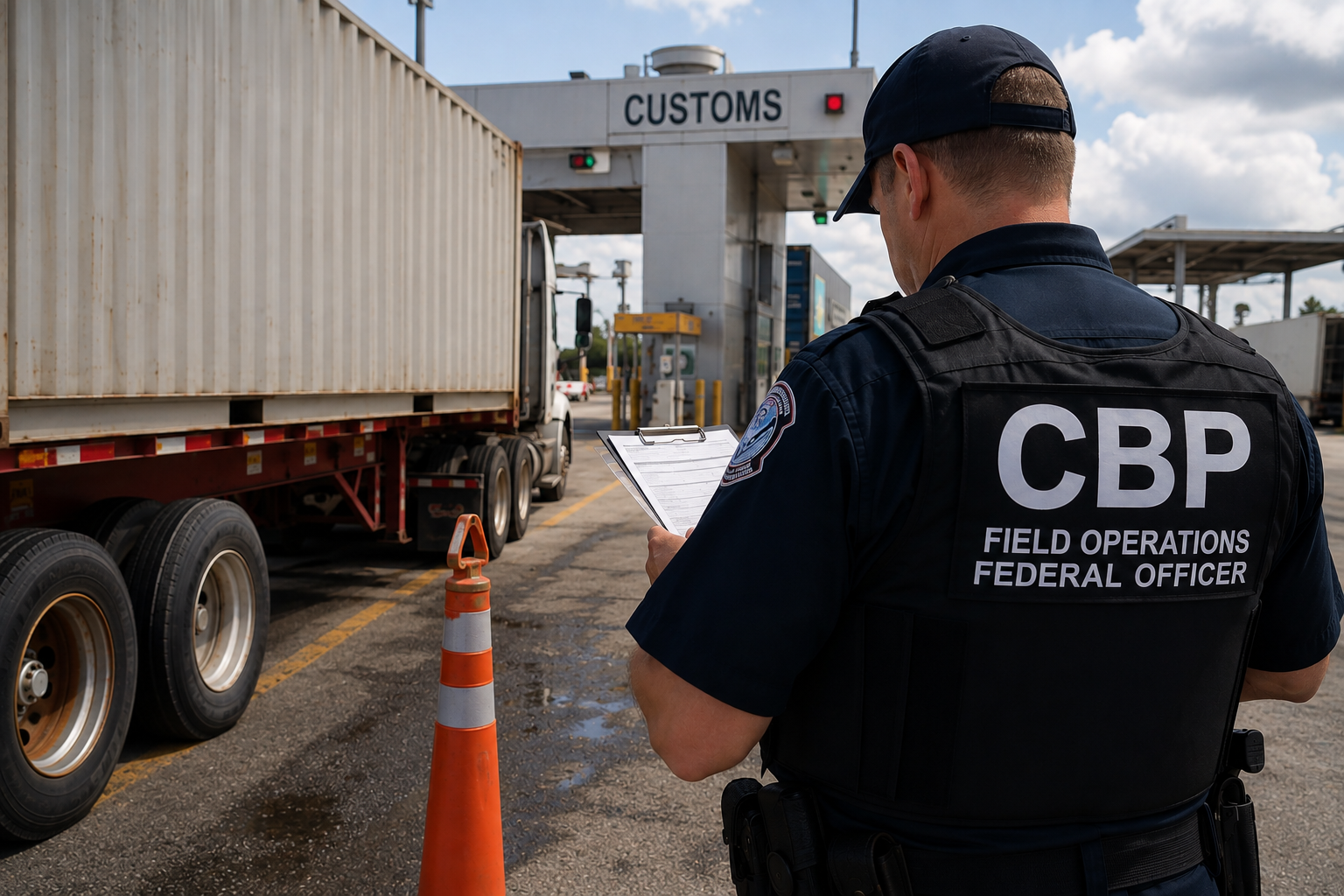
CBP publishes fewer exams, front-of-line treatment, and FAST lane access as CTPAT benefits. Here's how to calculate what that's actually worth to you.
Learn about the importance of CTPAT Business Partner Outreach, its benefits, and how to streamline the process for effective supply chain security.