

CTPAT Security vs. CTPAT Trade Compliance: Which is Right for My Company?
Discover the differences between CTPAT Security and CTPAT Trade Compliance to determine which program best suits your company's needs.
3 min read
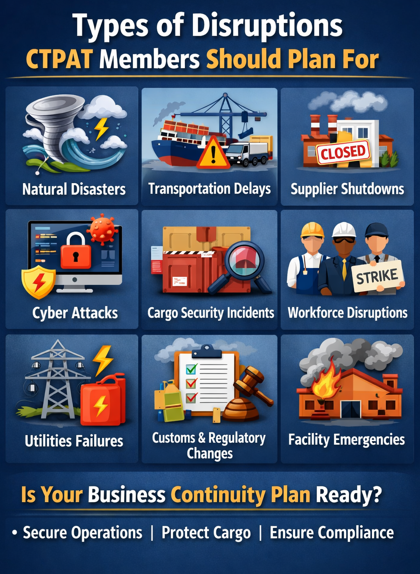
Global trade moves fast, until it doesn’t. From port shutdowns and cyberattacks to supplier disruptions and extreme weather events, the modern supply chain is more exposed than ever to unexpected interruptions. For companies certified under the Customs Trade Partnership Against Terrorism (CTPAT), resilience isn’t just a good business practice, it’s a critical security expectation. That’s why every CTPAT member should have a robust Business Continuity Plan (BCP).
We will break down what a BCP is, why it matters under CTPAT, and how it helps companies protect cargo flow, reduce compliance risk, and preserve customer trust.
🧾 What Is a Business Continuity Plan (BCP)?
A Business Continuity Plan is a documented strategy that outlines how a company will maintain essential operations during and after a disruption. Disruptions aren’t always “big disasters”, they can include:
• Natural Disasters & Weather Events
• Transportation & Logistics Disruptions
• Supplier & Production Failures
• Cyberattacks & Technology Outages
• Security Incidents & Cargo Integrity Threats
• Workforce & Labor Disruptions
• Utilities & Infrastructure Failures
• Regulatory, Customs, & Trade Compliance Disruptions
• Facility Disruptions & Physical Shutdowns
In supply chain and trade compliance terms, a BCP typically covers:
• Response procedures for operational shutdowns
• Risk mitigation for cargo delays and facility issues
• Communication plans (internal + external stakeholders)
• Recovery timelines and alternate routing options
• System/data recovery procedures (especially for trade systems)
• Security continuity protocols (e.g., access controls, seal controls, inspections)
A BCP isn’t just about getting back to work, it’s about staying secure, compliant, and reliable when conditions change.
CTPAT is designed to strengthen supply chain security and reduce risk across the entire trade ecosystem. That includes preventing terrorism related threats but it also includes protecting the integrity of supply chains when disruptions occur.
Disruptions create security vulnerabilities:
• During chaos, processes get skipped
• During delays, cargo becomes more exposed
• During backlogs, staff makes mistakes
• During system outages, visibility disappears
• During rerouting, security controls can weaken
When your operation is disrupted, your security risk increases. Having a BCP in place ensures the disruption doesn’t become a compliance incident.
Security programs often fail because of poor continuity. A BCP helps ensure CTPAT required controls remain intact even during emergencies, including:
• Container seal procedures
• Restricted access protocols
• Employee vetting and screening
• Cargo integrity checks
• Secure communications with brokers and carriers
CTPAT Members are expected to maintain effective and secure supply chain processes. If disruptions lead to process failures, the result can cause:
• Documentation errors
• Custody gaps
• Missing inspection records
• Weak data security practices
• Delayed reporting of incidents
Many importers and exporters depend on predictable routing and delivery times. If your company faces a disruption without a plan, the impacts ripple outward:
• Shipments delayed
• Contracts affected
• Customer service overwhelmed
• Credibility weakened
Cyber incidents are increasingly common and can shut down operations instantly. Digital disruptions include:
• Ransomware
• System outages
• Data Corruption
• EDI interruptions
• Compromised trade documentation
For CTPAT members, system disruptions can impact:
• ACE filings and compliance documentation
• Cargo visibility
• Chain-of-custody records
• Communication with ports, carriers, brokers
A BCP reduces downtime and limits losses by enabling:
• Pre-panned alternate suppliers
• Backup transportation routes
• Secondary storage or distribution sites
• Contingency labor planning
• Predefined decision-making authority
While each company’s plan should match its security profile, a strong BCP often includes:
• Risk Assessment - Identify vulnerabilities by geography, supplier type, facilities, IT systems
• Critical Function Mapping - Define what must continue (customs filing, security inspections, communications, etc.)
• Alternate Supply Chain Options - Backup carriers, brokers, ports, suppliers, 3PL facilities
• Security Continuity Controls - Seal procedures, access controls, incident escalation, security checks
• IT and Data Recovery - Secure backups, recovery time objectives, system fallback processes
• Communication Plan - Who contacts CBP, brokers, customers, internal teams, and when
• Testing & Training - Tabletop exercises, incident drills, annual updates
CTPAT certification signals that a company is committed to securing the flow of goods into the United States. But the supply chain is never risk-free. A Business Continuity Plan ensures that when disruption happens (and it will), your company remains secure, compliant, reliable and ready to recover. For CTPAT members, resilience isn’t optional, it’s part of protecting the integrity of the global trade network.
 For more information or to request a demo, visit Veroot's website at www.veroot.com/ctpat
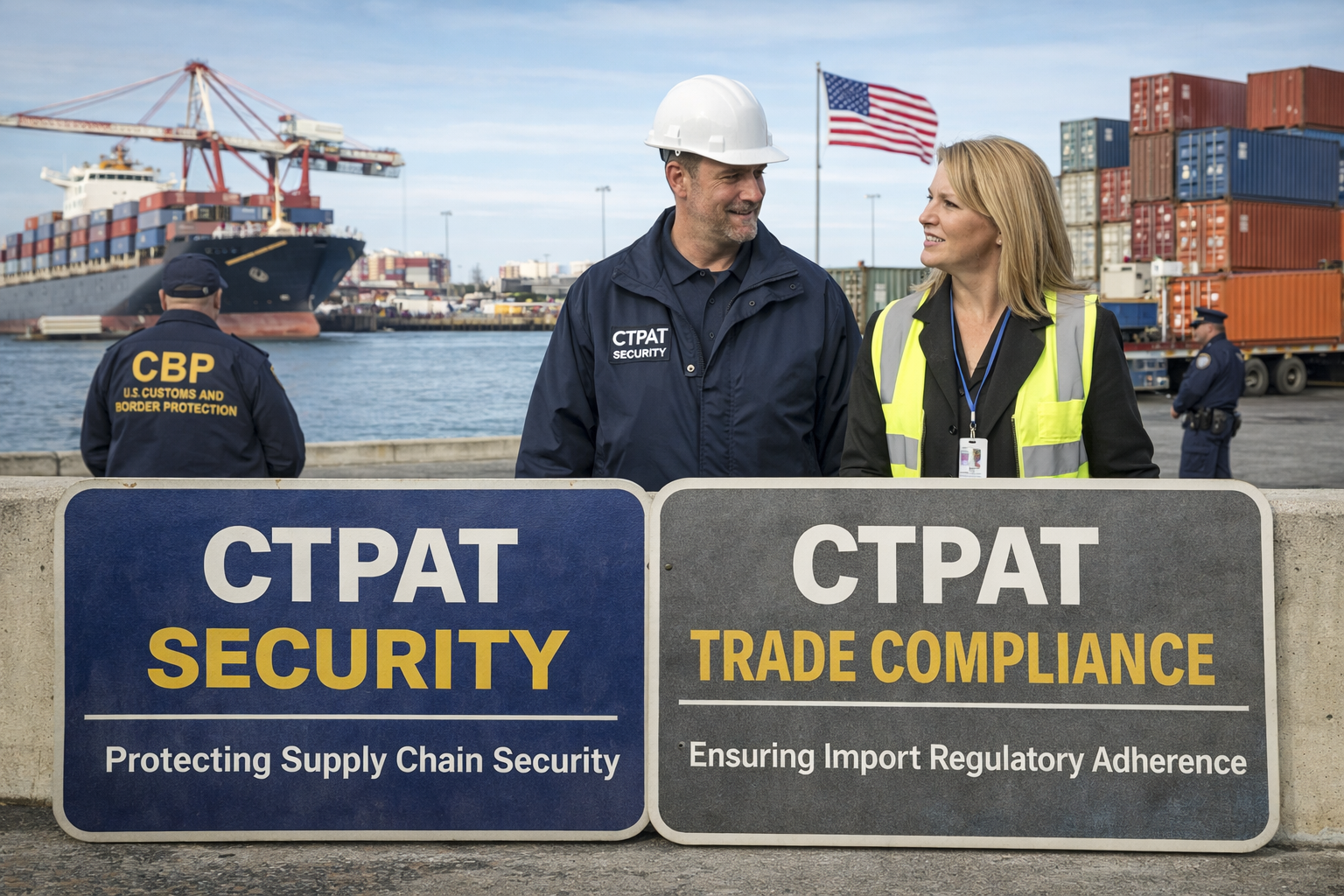
Discover the differences between CTPAT Security and CTPAT Trade Compliance to determine which program best suits your company's needs.

Protect CTPAT compliance from non-compliant partners. Learn strategies to maintain CTPAT certification, strengthen supply chain security, and...
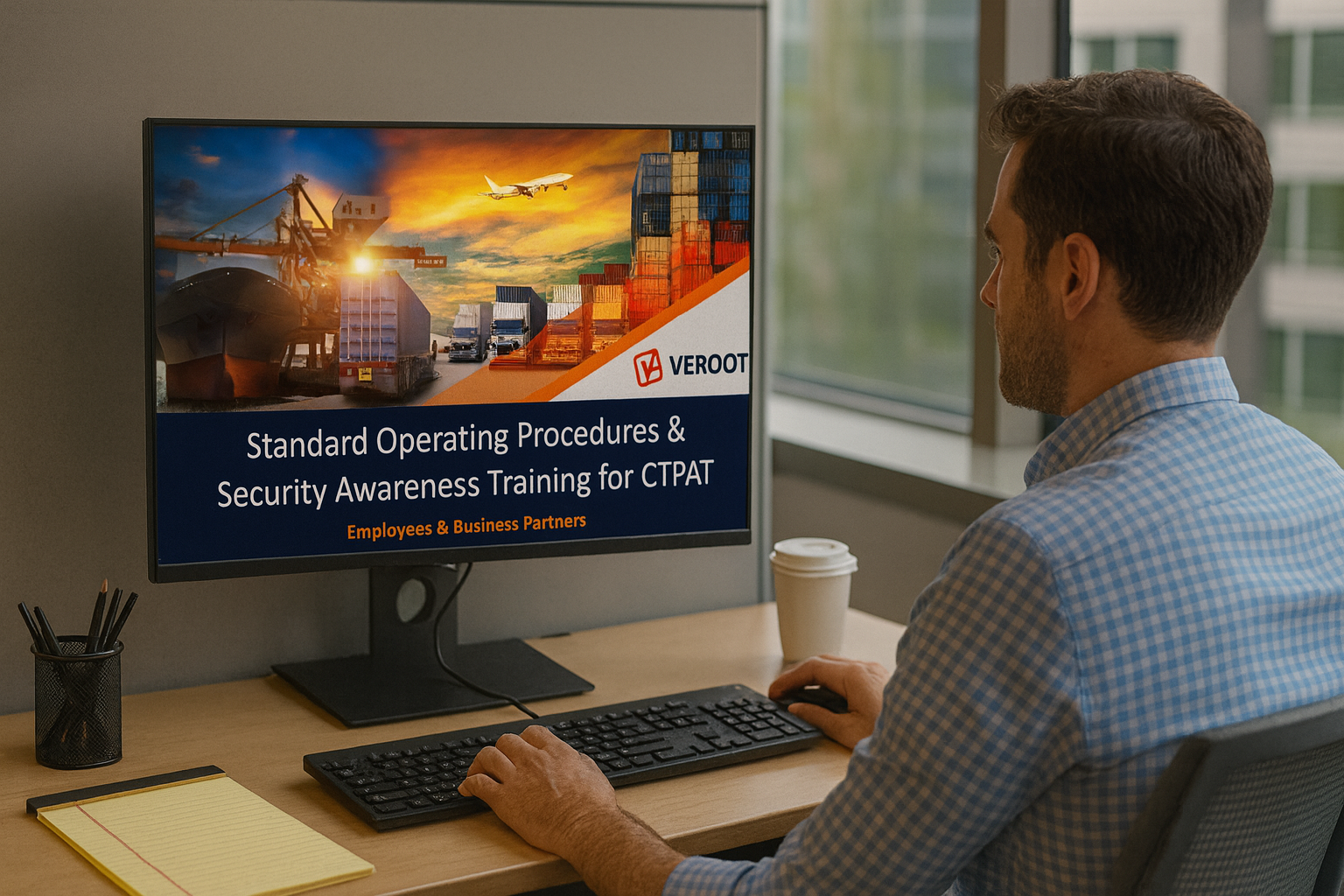
Enhance CTPAT compliance through continuous employee training, testing, and CTPAT audit preparation. Discover effective strategies to build a strong...