

CTPAT Compliance at Risk: How to Handle Non-Compliant Business Partners
Did you know that CTPAT certified companies can lose their CTPAT certification if their business partners fail to comply with CTPAT security...
2 min read
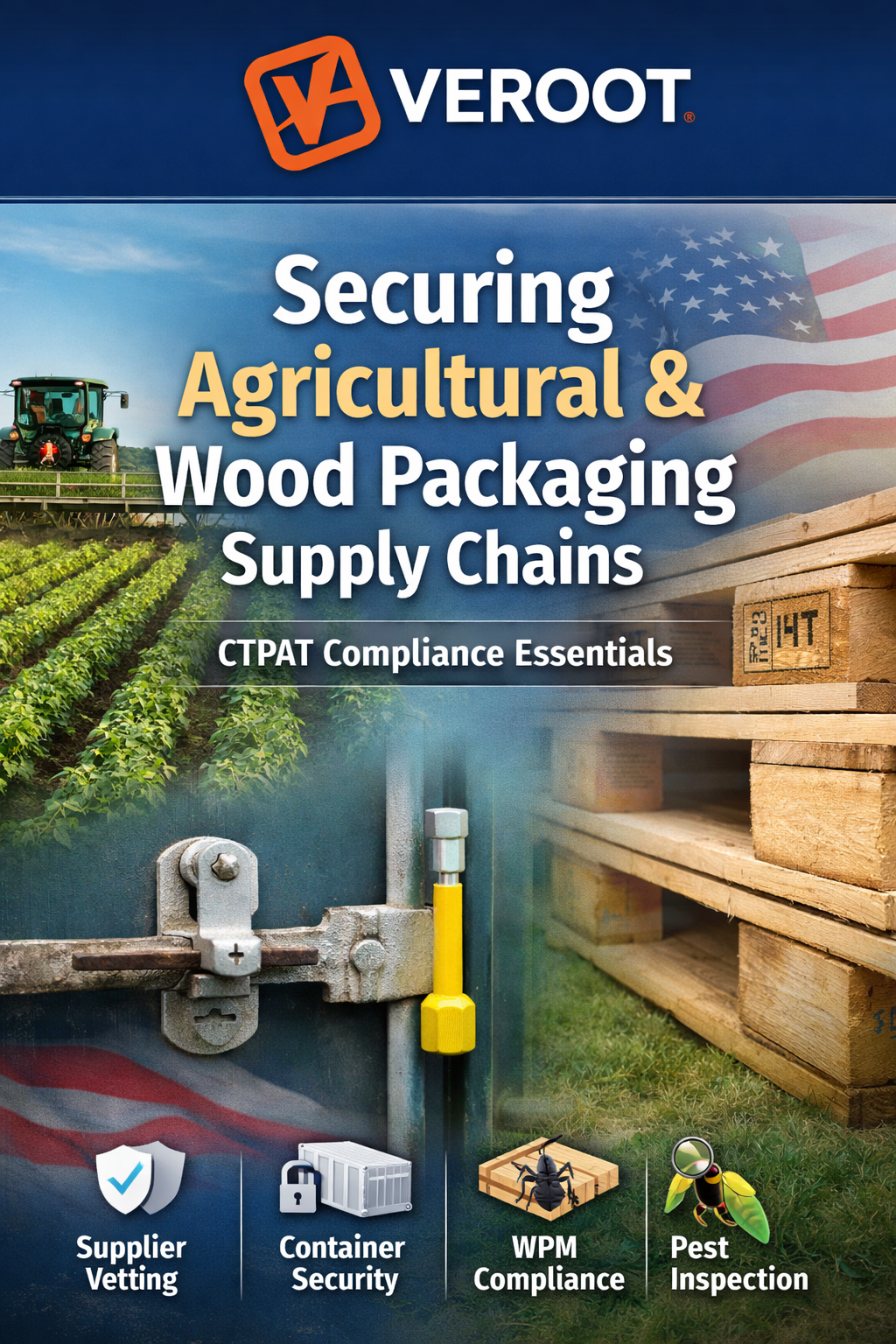
Global agricultural trade plays a vital role in food security and economic growth. However, it also presents unique supply chain security risks from pest contamination and smuggling to cargo tampering and wood packaging vulnerabilities.
For agricultural exporters, importers, growers, packers, and wood packaging manufacturers, participation in the Customs Trade Partnership Against Terrorism (CTPAT) program is more than a compliance requirement, it’s a strategic advantage.
At Veroot, we work with exporters, importers, consolidators and wood packaging manufacturers to simplify CTPAT compliance while strengthening overall supply chain resilience.
Agricultural supply chains differ significantly from traditional manufacturing environments. They often involve:
These conditions increase the risk of:
CTPAT addresses these vulnerabilities through structured risk management and documented security controls.
Agricultural exporters frequently rely on growers, consolidators, transporters, and pallet providers who may not have formal security programs in place. Required actions to mitigate risk:
Veroot helps organizations centralize supplier verification and risk scoring to ensure consistent compliance across seasonal and international partners via our Vendor Management System.
Containers are often staged in fields or remote packing facilities, creating additional vulnerabilities. Agricultural companies must implement documented inspection and seal control processes even in temporary or seasonal operations. Partners must complete:
Wood pallets and crates introduce both regulatory and security risk.
Improper WPM controls can result in shipment delays, CBP penalties, or intensified inspections. Veroot supports organizations by digitizing WPM supplier validation and maintaining audit ready documentation aligned with CTPAT expectations.
At Veroot, we frequently identify the following challenges during CTPAT program reviews:
A well managed CTPAT program delivers measurable benefits:
Veroot provides integrated solutions that help organizations:
Agricultural and Wood Packaging Material supply chains operate in environments that naturally present higher security risk. CTPAT compliance is not simply a regulatory exercise, it is a framework for protecting cargo, preventing disruption, and building long-term trust in global trade.
Organizations that proactively strengthen their agricultural supply chain controls will be better positioned to navigate regulatory scrutiny, seasonal variability, and evolving global security threats.
At Veroot, we help companies move beyond compliance toward resilient, secure, and transparent supply chains. For more information or to request a demo, visit Veroot's website at www.veroot.com/ctpat.


Did you know that CTPAT certified companies can lose their CTPAT certification if their business partners fail to comply with CTPAT security...

 Sarah Velazquez : Mar 16, 2026 4:24:53 PM
Supply Chain security is not what it used to be, but that is a good thing! It has come a long way, and CTPAT compliance is evolving right along with...
CTPAT (Customs Trade Partnership Against Terrorism) can often feel like its own language and has a way of sounding intimidating when digging in....